
A Reflection by Seth Dickson
You may think you don’t have time for this kind of thing. Speaking strictly as an adult, you probably do not, and that is entirely the point of the exercise.
Keep in Mind
When we take time to play, we free up the creative, imaginative, and spontaneous parts of ourselves that get ignored because of our busy, agenda-driven lives. The benefit of play? We are reminded that wonder and joy are not luxuries; they are an important part of who we are. We aren’t talking about “competitive” play here. You are doing something purely for the immediate enjoyment of it, for its own sake.
Some Suggestions
Go back to your earliest memory of a joyful, playful time in life. What things do you do now that bring you closest to those feelings from childhood? What is the one thing you liked to do as a child? Legos? Painting? Climbing trees? Is there an adult equivalent? Instead of climbing trees, try rock climbing. If you are competitive in nature, what would it be like to play where you let go of the performative aspect and simply enjoy the moment?
There are different kinds of play. Which one feels most like you?
Types of Play
Rough and Tumble play is adventurous, messy and unstructured (ex: climbing, wrestling, chasing).
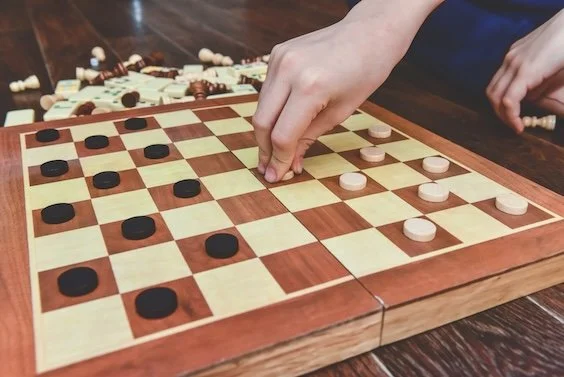
Ritual play has structure and requires strategy (ex: board games, sports).
Object play involves manipulating, designing or building something (ex: Legos, a fort).
Imaginative play uses creativity and fantasy (ex: painting, acting, drawing).
Body play involves physical movement (ex: dance, running, jumping).
Narrative play has to do with storytelling (ex: writing, performing skits).
Reflect
After your time of play, use some of the following prompts to help process the time spent and get in touch with what is stirring up in you.
• What feelings arose as you thought about how you would play? How did you feel while you were doing it?
• Why did you choose the specific activity you did?
• Track your feelings throughout the time you played. Did they change? When?
• What happened to your sense of time? Were you checking the clock frequently? Did you lose sense of time at any point?
• What, if anything, felt nourishing about this? What, if anything, felt silly or uncomfortable?
• As you sit with this experience now, what thoughts, feelings or sensations from your childhood surface?

Seth is a facilitator with our Sacred Self, Sacred Community program.
This play practice is from a piece he wrote on “Awe and Wonder” on his blog, Soul Search. He has a podcast on this subject as well.
Did this reflection resonate with you?
Share your thoughts in a Sacred Circle. New people always welcome.